
Six Weeks in the Field: A Volunteer’s Account of Habitat Recovery
By Brian, Early-Career Conservationist
The reality of habitat restoration in Uganda is far removed from the theoretical models taught in a classroom. My six weeks in the field with MCCA, working across degraded landscapes in Masindi, was a rapid, intense education in the physical and strategic realities of conservation.
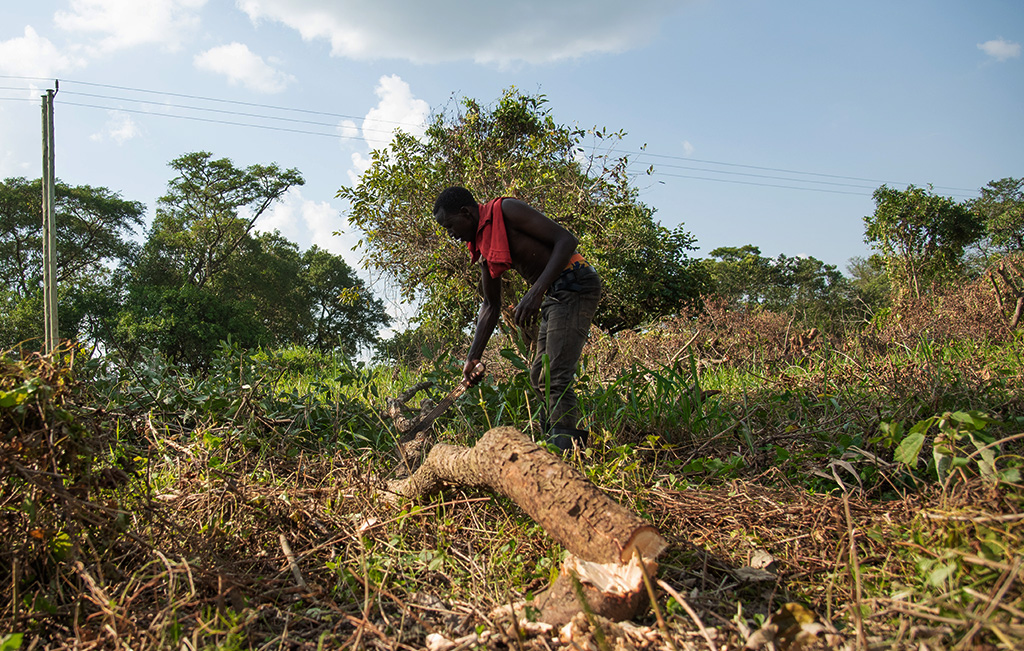
A typical day begins before the heat sets in. When I arrived at the site, the scale of the invasive encroachment was immediate. We were dealing with dense thickets of Lantana camara and Acacia nilotica. The morning briefing involved reviewing the site map, identifying priority zones for mechanical removal, and coordinating with the local community members who make up the bulk of the field team.
The physical labour is demanding. I spent hours learning the proper techniques for cutting, uprooting, and mulching. It is not simply about clearing vegetation; it is about minimising soil disturbance to encourage native regeneration. I was trained to use GPS equipment to map the cleared areas, feeding data directly into MCCA’s long-term monitoring systems. This is where the science happens—not just in the lab, but knee-deep in the brush, recording coordinates and assessing wildlife tracks.
Working alongside the local community was the most profound part of the experience. These are the people who live with the immediate consequences of human-wildlife conflict and land degradation. Their knowledge of the land is encyclopedic. They know exactly where the wildlife moves and how the vegetation has changed over the years.
On my final week, the team discovered wire snares concealed within the dense thicket we were clearing at Kabim. It was a stark reminder that this work is not just ecological; it is a security operation that directly protects the park’s wildlife.
Leaving the site, I had a completely different understanding of what it takes to restore a landscape. It requires grit, rigorous data collection, and a deep partnership with the people who call these areas home. For anyone considering a career in conservation, the field is the only place to truly learn the work.