
From Conflict to Coexistence: Beekeeping at the Forest Edge
In the communities surrounding Uganda’s protected areas, wildlife is often viewed as a liability. Elephants and other large herbivores routinely raid crops, destroying a family’s entire seasonal harvest in a single night. This crop raiding is a leading driver of human-wildlife conflict, pushing vulnerable households toward retaliatory actions and illegal activities.
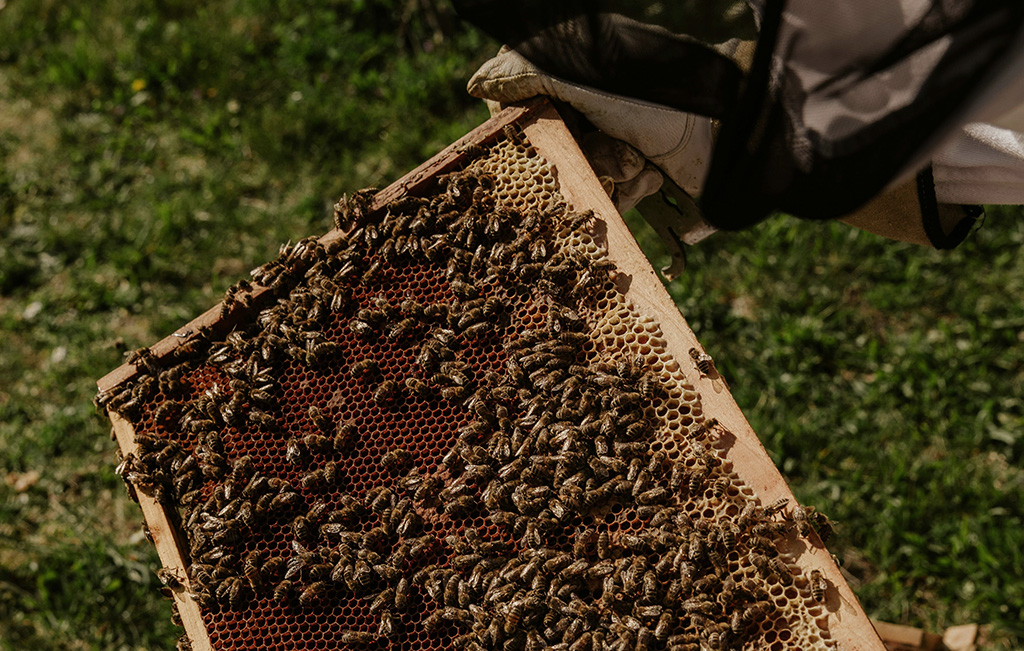
To address this at the source, MCCA implements community beekeeping programmes at the forest edge. This initiative is designed to transform the economic reality of living near a national park.
By providing training, modern hives, and market access support, MCCA turns affected households into commercial beekeepers. This delivers two distinct, measurable benefits. First, it creates a sustainable alternative income stream that does not rely on farming or livestock, reducing pressure on the land. Second, the apiaries serve as a natural deterrent. Elephants possess an acute sensitivity to sound and smell; the presence of active beehives is a highly effective, organic boundary that keeps wildlife away from homesteads.
This programme directly advances the UWA priority of increasing and diversifying wildlife utilisation benefits to communities. It is a practical application of MCCA’s community-centred practice. Conservation cannot succeed if the people living on the boundaries bear the costs without seeing the benefits. By turning the land into a productive asset for beekeeping, we align local economic prosperity with the protection of the ecosystem. The result is a shift from conflict to coexistence, where communities become the first line of defence for the park.